“The Heart is Not Just a Pump: Listening to the Emperor”
Jan 09, 2026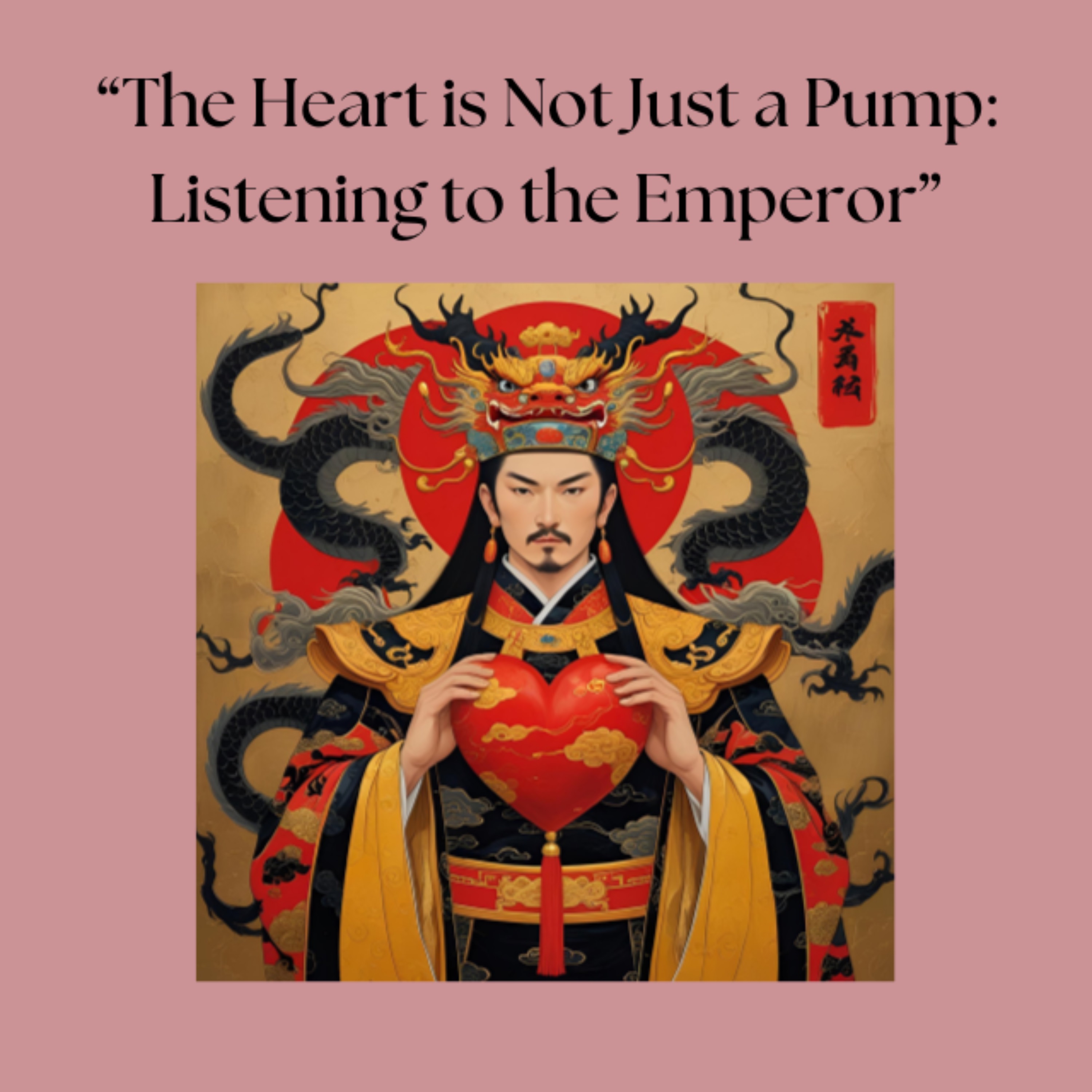
“The Heart is Not Just a Pump: Listening to the Emperor”
Hello and welcome to my podcast, ancient Wisdom Modern Health. Reaching the balance within This is where we get to explore the ancient practice of classical East Asian Medicine and it's applicability to modern day health issues. I'm your host, Dr. Ian, and I'm a doctor of Chinese medicine with degrees in human biology.
And Chinese medicine, as well as a postgraduate diploma in classical East Asian medicine. Now, I've been treating people in regional Australia with East Asian Medicine for over 20 years now, and I've helped them to see their symptoms in a new way through the lens that is classical East Asian Medicine with its warm, rich, insightful, functional and practical ways, and with its use of lifestyle.
Combined with herbal medicine and acupuncture, so is to help them reach the balance within. Now, I assume that if you have found me here, then you're someone who is searching, someone who is looking for answers to your health issues, answers that make sense, answers that also give you an understanding and a clarity, and allows you to have control of your health problem.
And provides practical solutions that can make you your own health champion. And I'll also understand that you're someone who is looking for some ancient wisdom that's going to give you an understanding of your modern health issues, and that can show you how to reach the balance within it. Now, Classical East Asian Medicine can provide that different lens with which to see.
Some of the issues of women's health, menopause, dietary issues, stress, sleep issues, seasonal awareness, men's health or pain management. Now through this lens, you can achieve the balance within, so please come join with me now as we journey through the ancient wisdom that is Cassical East Asian Medicine.
And discover how it can have a positive impact on your modern life and bring your health back to balance. So let's explore that ancient wisdom and reach the balance within together. It is important, however, for you to understand that the information covered within these podcasts. Is not to be taken or used for diagnostic purposes.
It is for general information only, and as a general guide, if these podcasts raise health issues that are real concern [00:03:00] to you, then you need to have a full and proper consult with the appropriate healthcare professional.
Also, if you would like to become a member of the Sagire Health Balance Community, please do go to my website Sagire.com au, and click on the join here button and follow the prompts. Once inside, you'll get access to all the pod past podcasts with full transcripts and all the workbooks, worksheets, diaries, recipes, meditation guides, or any other further readings mentioned in this podcast or any other podcast.
You can also access relevant research papers and the online community and it's the online communities where you will also be able to ask any questions and I will be answering those questions you might have and you might have raised that aren't covered in the podcasts or anywhere else. And it's also be able to keeping you up to date with what is in the pipeline for future events.
So let's now just please jump in.
Hello and welcome to this podcast. This is where we're going to explore Classical East Asian medicine and how it can help us navigate health healing and all of life's beautiful changes. I'm Dr. Ian Dummett, , I'm a doctor of Chinese medicine. And today we're gonna talk about something that is quite literally close to the heart, because what if your heart is more than just a pump?
Now, what we've been taught, okay, for many of us, the heart was introduced to us as a kind of mechanical engine. A strong muscle that pushes blood through the body, [00:05:00] keeping the whole system running. It's reliable. Rhythmic and vital and look in some ways that's very true. However, over the years, I have come to a different understanding and a different feel.
I feel that the heart is more than just a piece of plumbing. Now, in classical East Asian medicine, the heart is known as the emperor. That is, it's the sovereign ruler, the one who holds court, if you like, over all the other organs and systems. And its role is not just physical, but emotional, mental, and spiritual.
It is also the resident of the Shen, SHEN, and that's loosely translated as the spirit and when the Shen is calm. Your life feels balanced when it is disturbed. Everything else unravels .
Now, you may have come across modern thinkers or even researchers suggesting that a heart is not just a pump that perhaps behaves more like a vortex. Or a conductor of electromagnetic resonance. Some of these ideas come from fields like biophysics or organizations like the Heart Math Institute.
And while the language may sound scientific or even a bit well out there, I suppose, I believe it echoes. Echoes something that classically East Asian Medicine has always known. And that is that the heart is more than a muscle. It is a resonator. It is a tuner, a conductor of our entire system. [00:07:00] And the heart does respond to joy, to grief, to love, to shock, and it is a field of intelligence and it does carry memory, not just the memory of events, but of how we felt in those moments.
Shen and the Inner Light. In classical East Asian medicine, we say that the Shen lives in the heart, and the shen is often described as our consciousness or the light behind the eye. When someone walks into a room and you feel their presence, that is their warmth. Whether they're calm, whether they're grounded, that's shen.
When someone is scattered, frightened, or disconnected, that means that the Shen can appear clouded or dim.
Now, the health of the heart directly influences our ability to connect. To connect with others, to connect with ourselves, and to connect with life
in clinic. When I see someone struggling with sleep or anxiety or they have a deep sense of unease, I will immediately start thinking of the heart, not just in terms of the physical health, but in terms of emotional balance. I ask questions like, what is the shen asking for, what does the emperor need to feel safe again,
the rhythm of life.
Ah, the heart is rhythmic, but not just in its beat. It [00:09:00] governs our daily rhythms, our cycles of waking and sleeping, of speaking and being silent of action and rest. A disturbed heart rhythm does not always show up on an ECG, for instance. Sometimes it shows up in your dreams, in your speech, in your ability to settle or focus, or even in a kind of emotional flatness where joy feels so far away.
The beautiful thing about classical East Asian medicine. Is that we don't separate these things. The emotional and the physical are threads in the same tapestry,
and that means healing is possible through many pathways. Acupuncture, herbal medicine, lifestyle changes, emotional connection. Even just [00:10:00] being heard can soothe the Shen.
Coherence and connection. Some of the modern research into heart coherence is catching up with what cream has been less griping for centuries. When we breathe slowly and we feel gratitude or love, the rhythm of the heart becomes more, even more fluid. This, in turn, calms the nervous system. It improves clarity and supports immunity.
In other words, a calm heart creates harmony across the entire system, and this harmony is not just internal, it radiates it. Electromagnetic field of the heart has been measured several feet from the body. We feel each [00:11:00] other through this. This is why connections heal. Why a mother can soothe the baby simply by holding them close.
Why presence matters in medicine,
tending to the emperor. So how do we care for the heart in this deeper sense? Sometimes it could be through herbs that calm the hin, nourish the blood. Or anchor the yang. Sometimes it's with acupuncture points like heart seven or or pericardium six N one, or even Ren 14. That brings stillness and clarity, but often it's also the simple things, creating time for reflection, spending time with people who feel.
Safe to you. Practicing gratitude, listening to music that might open the chest. Breathing with awareness, letting yourself feel fully without judgment. This is how we contend to the emperor.
So in closing, yes, the heart. Is the heart, and yes, it beats, it circulates blood, but it also listens. It feels, it remembers and it connects. It is this bridge between the physical and the emotional, the vessel of our spirit, the rhythm of our inner world.
It is in every sense instrument of the soul.
So I'd like to thank you for joining me today, and I hope this reflection has opened a small window into the beauty and depth of how we view the heart in classical East Asian Medicine. If you'd like to explore more, you can find resources and upcoming sessions of training or seminars at the Sagire Health Community.
And as always, I welcome your thoughts and reflections. You can reach out by the website or on social media. So until next time, stay warm, stay centred, and take a moment to listen to your own heart.
Stay connected with news and updates!
Join our mailing list to receive the latest news and updates from our team.
Don't worry, your information will not be shared.
We hate SPAM. We will never sell your information, for any reason.